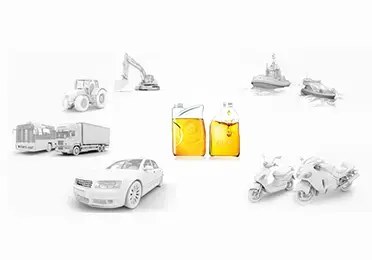
Used oils are divided into two categories:
- The so-called clean oils, of industrial origin and slightly deteriorated in quality by use, which can be easily reproduced through a simple purification treatment (filtration and/or centrifugation).
- The so-called black oils, mainly derived from automotive lubrication, which have been subjected to difficult thermal and mechanical conditions, under which they have become loaded with metals and combustion residues and have oxidized.
None of these oils should be confused with used soluble oils and other aqueous mechanical processing fluids, or with vegetable frying oils, or water-hydrocarbon mixtures for which completely different methods are used for collection and disposal.
Are used oils dangerous for the environment?
Used oils are only slightly biodegradable. Their disposal in the natural environment is therefore dangerous for natural systems. For example, used oils dumped into a body of water will reduce the amount of oxygen available for flora and fauna. Furthermore, burning waste oils under uncontrolled conditions will produce emissions and combustion residues that are dangerous to the environment.
What NOT to do with used oils:
- Never dispose of used oils in waste siphons, landfills, gutters or drains.
- Never use them to protect wood paneling
- Never use them as heating fuel.
How should you store used oils?
Leak-proof facilities should be available to store your used oils while you wait for them to be collected. These facilities should be easily accessible to vehicles suitable for collecting these oils.
How do you collect your used lubricants in Greece?
TotalEnergies Marketing Hellas pays a lubricant recycling tax in accordance with Greek law, to provide the end consumer with a free recycling service. The approved manager of waste lubricating oils (WLO) in Greece is now the Alternative Management of Waste Lubricating Oils (EN.DI.ALE. SA www.endiale.gr ), formerly ELTEPE SA.
What happens to used oils after collection?
After collection, used oils can follow different paths for their processing:
- Clean used oils are mainly recycled
- Black oils are either remanufactured, incinerated in cement works, or burned in specialized centers (for energy recovery)